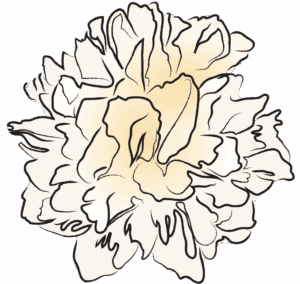
Bai Shao
English Name: white peony root
Pharmaceutical Name: Radix Paeoniae Alba
Medica Category: Blood-Tonifying Herbs
Properties: Bai Shao enters the Liver and Spleen channels; it is bitter and sour in nature and cool in temperature.
 What is Bai Shao?:
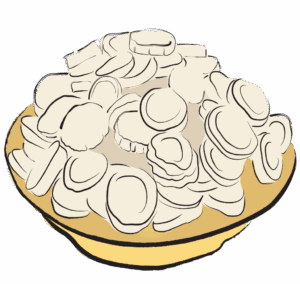
The Chinese Herb Bai Shao is derived from the root of peony plant (Paeonia lactiflora Pall.), which is the same plant from which Chi Shao, or red peony root, is also derived. While Chi Shao is the unpeeled root that is simply sun-dried, Bai Shao (literally “white peony”) is produced by digging up the root of a 3-4 year old plant, cleaning it, and then peeling the outer skin off to reveal a white underlayer. The peeled root is then boiled for a short time, sun-dried, and then sliced for use as medicine. This processing warms the peony root up a bit and changes the actions for which it used medicinally (see section below).
 Traditional Chinese Medicine (TCM) Therapeutic Actions of Bai Shao:
Bai Shao nourishes Liver blood and yin to address Liver blood deficiency, general symptoms of which include: anemia, sallow/pale complexion, brittle/pale nails, dizziness, and vertigo.
Bai Shao nourishes blood, softens the Liver, and alleviates pain. It is a very common and important herb for addressing a variety of obstetric and gynecological disorders with chronic Liver blood deficiency somewhere in the pattern. Symptoms addressed by the addition of Bai Shao to a formula include irregular menstruation, dysmenorrhea, uterine bleeding, and gestational and postpartum disorders. Bai Shao, in its action of preserving the yin, also addresses night sweats (and other forms of abnormal perspiration as well—often combined with Gui Zhi (Cinnamon Twig) for this purpose).
Liver blood and yin deficiencies often underly Liver qi stagnation, and so Bai Shao is often used to address pain and cramping associated with PMS as well (as in the formula Xiao Yao Wan—Free & Easy Wanderer/Rambling Powder).
Bai Shao is cooling in temperature and nourishing to Liver and in this regard calms Liver yang rising and Liver wind (with concurrent deficiencies of Liver yin and blood). Clinical presentations of this pattern include dizziness, flushed face, red eyes, irritability, angry outbursts of temper, headaches, and vertigo.
Bai Shao softens the Liver and relieves pain in the muscles, tendons, and ligature caused by deficiency of Liver yin and blood. Bai Shao also address abdominal and hypochondriac pain as well as spams and cramps of the smooth muscles of the abdomen (as in the formula Shao Yao Gan Cao Tang—Peony and Licorice Decoction).
–safety/clinical notes:
Contraindicated for yang deficiency in the middle jiao with cold signs (such as poor appetite and loose stools).
Contraindicated in postpartum women with blood stagnation or who are still bleeding.
Use of Bai Shao may be associated with drowsiness and sedation.
Use Bai Shao with caution in persons taking antidiabetic drugs such as insulin, sulfonylureas, and other diabetic medications (e.g. tolbutamide (Orinase), glipizide (Glucotrol), and glyburide (DiaBeta/Micronase)) as synergistic effects could lead to hypoglycemia.
Bai Shao has a mild anti-coagulant effect and should be used with caution in persons taking anticoagulant medications such as heparin, warfarin (Coumadin), and enoxaparin (Lovenox)) or anticoagulant medications such as aspirin, dipyridamole (Persantine), and clopidogerel (Plavix).