$7.95 USA Shipping • $200 FREE Shipping • 90-Day Hassle-Free Returns

Home » Mi Meng Hua – Buddleja – Flos Buddlejae

Mi Meng Hua – Buddleja – Flos Buddlejae

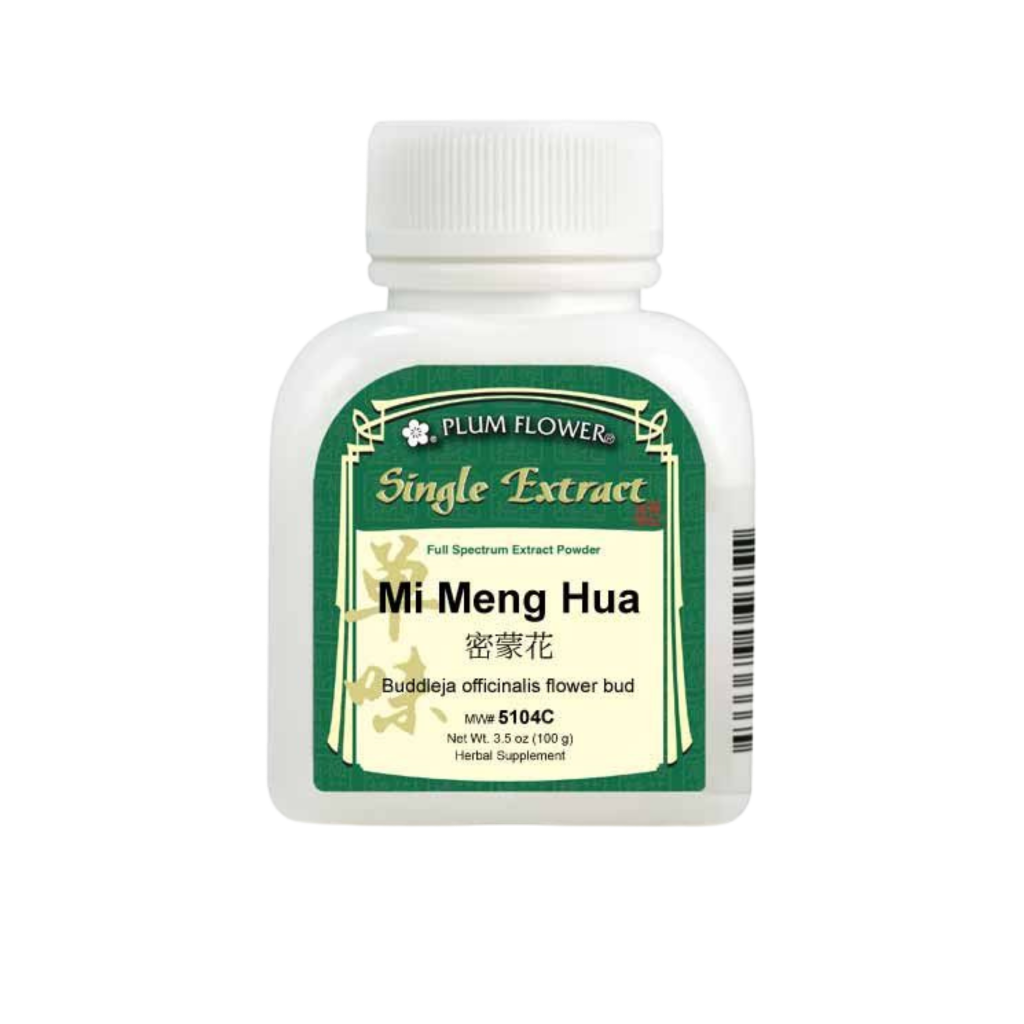
Mi Meng Hua

English Name: buddleja, pale butterfly bush flower

Literal Translation: “dense-mist flower”

Pharmaceutical Name: Flos Buddlejae

Medica Category: Heat-Clearing and Fire-Purging Herbs

Properties: Mi Meng Hua enters the Liver channel; it is sweet in nature and cool in temperature.

What is Mi Meng Hua?:

The Chinese Herb Mi Meng Hua is the dried flowers of the pale butterfly bush (Buddleja officinalis), a medium to large, semi-evergreen shrub with pale mauve, yellow-eyed, strongly fragrant flowers native to Western China.

Traditional Chinese Medicine (TCM) Therapeutic Actions of Mi Meng Hua:

Mi Meng Hua enters the Liver channel to clear heat and benefit the eyes. It can deal with a wide variety of eye/visual problems (that come from excess or deficiency heat, as well as from wind-heat) ranging from photophobia to redness and swelling to superficial visual obstructions depending on the other herbs it is used with in formula.
Products Containing Tag: Mi Meng Hua – Buddleja – Flos Buddlejae

Latest Blog Posts

  • How to Apply Hemorrhoid Cream: Step-by-Step Guide
    How to Apply Hemorrhoid Cream: Step-by-Step Guide

    Best Chinese Medicines informs how to apply hemorrhoid cream step by step for safe relief. Follow proper techniques, timing & tips for effective care.

  • What Does Hemorrhoid Cream Do? How It Works (And When to Use It)
    What Does Hemorrhoid Cream Do? How It Works (And When to Use It)

    Key Takeaways Hemorrhoids can cause persistent discomfort, especially when symptoms like itching, swelling, and irritation start to affect everyday activities. Many people rely on topical solutions for relief, and creams are often the first option they consider. Understanding what hemorrhoid cream does can make a difference in how it is used and how effective it…

  • Eating With the Seasons: TCM Tips for Summer

    TCM (Traditional Chinese Medicine) teaches that eating and living in harmony with the seasons can help prevent imbalance and support better health year-round. Summer is the most yang time of year; it’s active, outwardly expressive, and expansive. The days are long, the sun is high, and nature is in full bloom. While we want to…