San Qi
English Name: pseudoginseng, notoginseng, tienchi ginseng
Literal Translation: “three-seven”
Pharmaceutical Name: Radix Notoginseng
Medica Category: Stop-Bleeding Herbs
Properties: San Qi is sweet and slightly bitter in nature and warm in temperature.
What is San Qi?:
The Chinese Herb San Qi (commonly known as notoginseng or pseudoginseng—Panax notoginseng) is a perennial herb with dark green leaves branching from a stem with a red cluster of berries in the middle that grows all over China. The roots are harvested between three and seven years after it is planted (partly why it’s called “three-seven root”), sliced, and dried for use as medicine.
San Qi is widely thought to be one of the main constituents of the stop-bleeding formula Yunnan Baiyao (although its exact formulation is a closely guarded secret).
Traditional Chinese Medicine (TCM) Therapeutic Actions of San Qi:
San Qi stops bleeding while simultaneously invigorating the blood. This gives it the unique quality of stopping bleeding without causing blood stagnation. It can be used both internally and externally to address a wide variety of bleeding issues such as: nosebleeds, vomiting blood, coughing up blood, blood in the urine, hematochezia, and abnormal/profuse uterine bleeding (not an exhaustive list by any means!… see Chen and Chen p. 588 for a full discussion of this herb’s clinical applications).
San Qi activates blood circulation and relieves pain: this roughly translates into addressing bleeding from internal and external trauma that has qi and blood stagnation at its root. Clinically, this kind of bleeding shows up with bruising, swelling (especially that which is painful when palpated), and pain.
**safety notes
Use with caution during pregnancy.
San Qi invigorates the blood and thus has the possibility of interfering with anticoagulant medications (e.g. warfarin (Coumadin) and enoxaparin (Lovenox)) and antiplatelet medications (e.g. aspirin, dipyridamole (Persantine), and clopidogrel (Plavix)). Note that this potential interaction of San Qi and these medications has not been documented; nevertheless, it is prudent to be aware of its possibility.
Products Containing Tag: San Qi – Notoginseng – Radix Notoginseng
-
Xin Mai Ning – Dong Quai and Salvia Combo
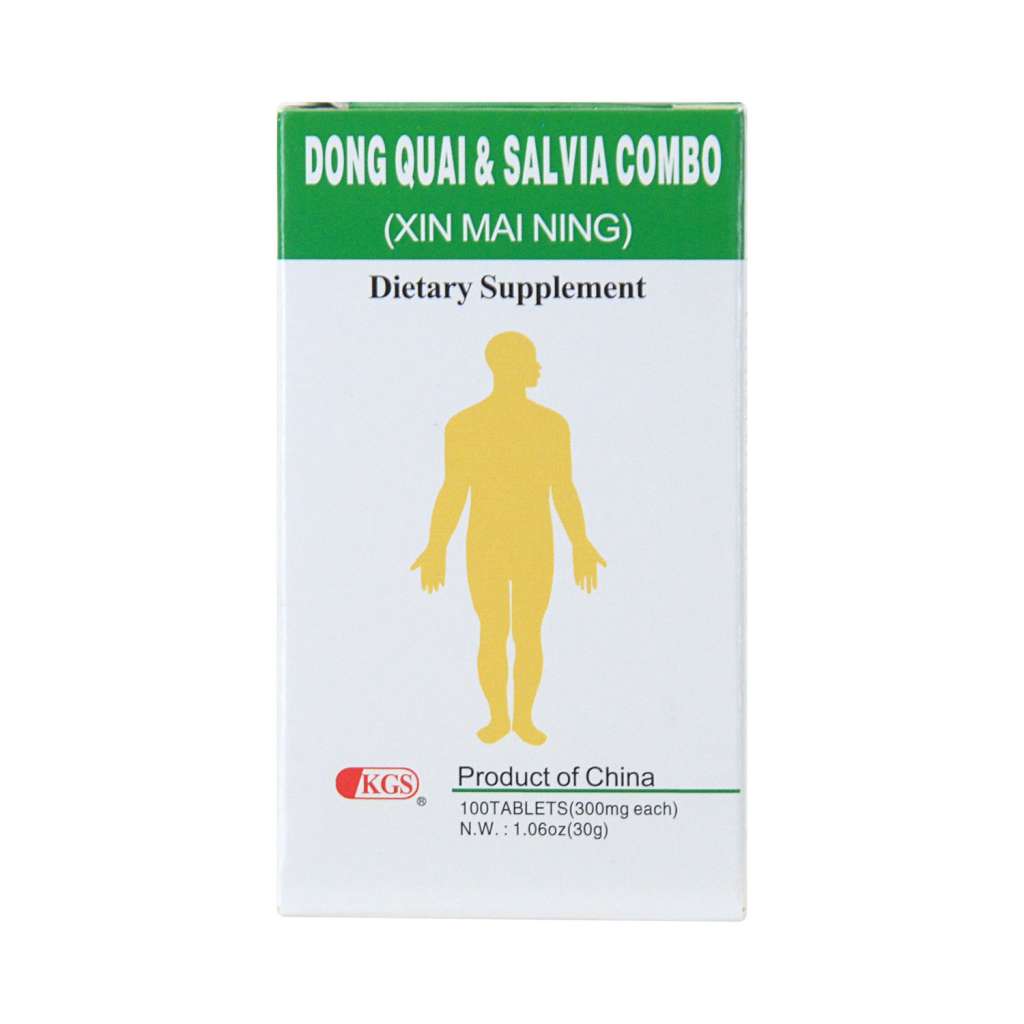 Add to CartStarting at $6.45
 -
Magic 5 – Inflammation Tea – (OUT OF STOCK)
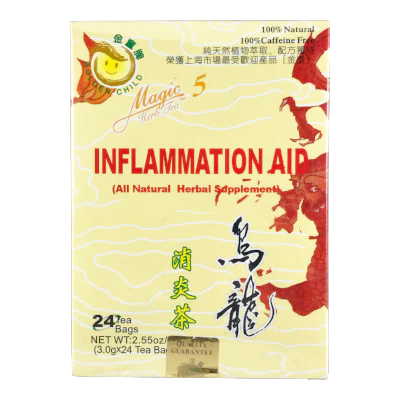 Add to Cart$13.70
 -
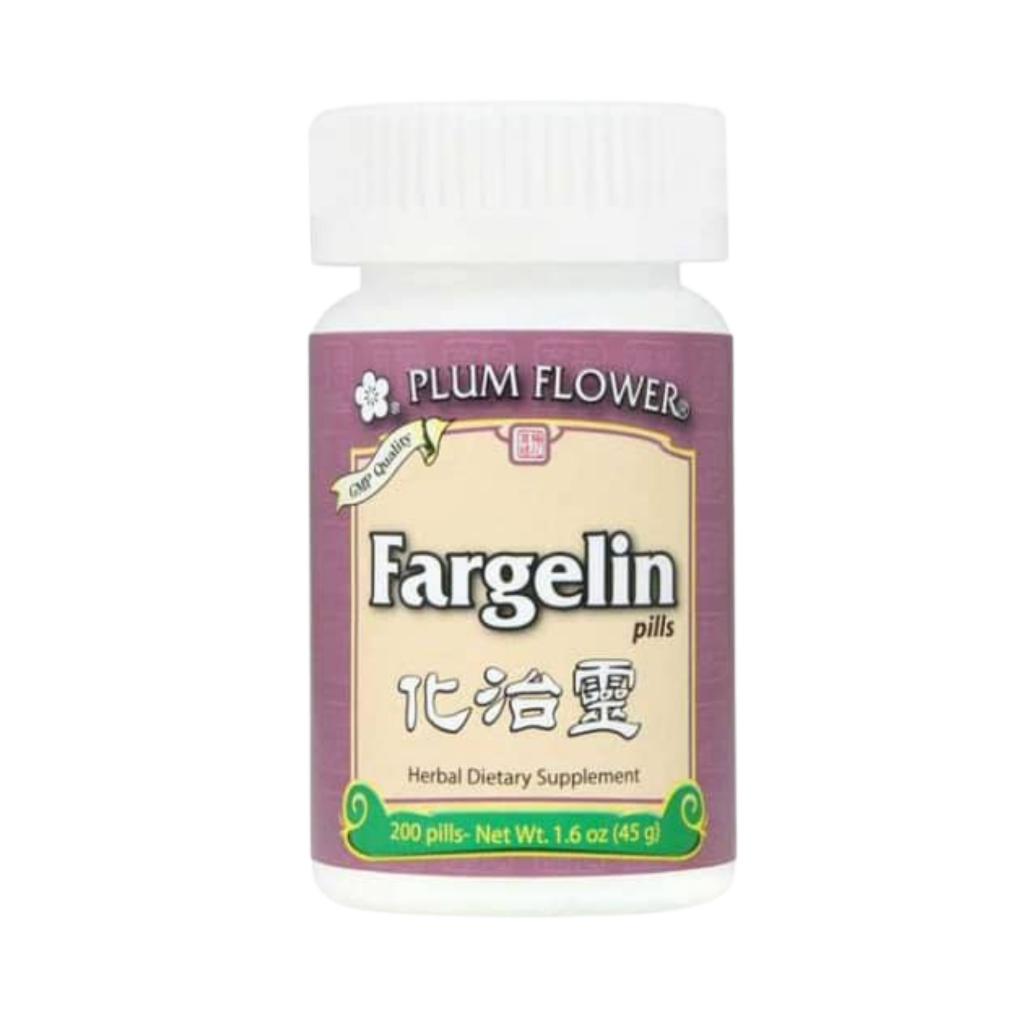
Plum Flower – Fargelin Pills (Hua Zhi Ling Wan)
 Add to Cart$23.83
$31.30 -
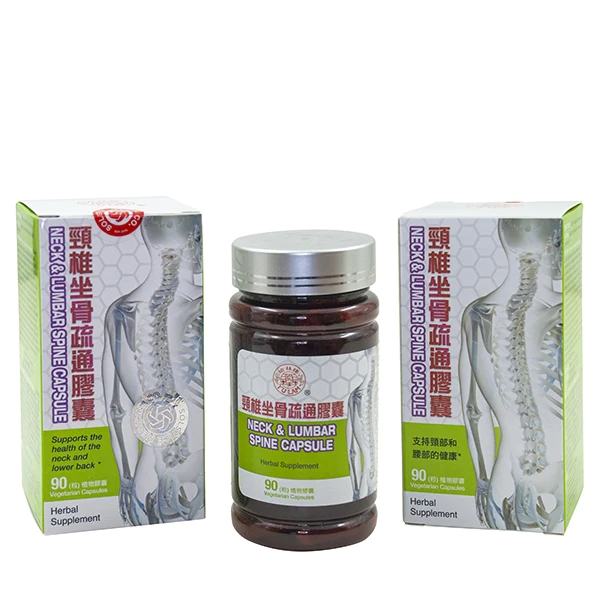
Neck and Lumbar Spine Capsules – by Yu Lam
 Add to Cart$16.99
 -
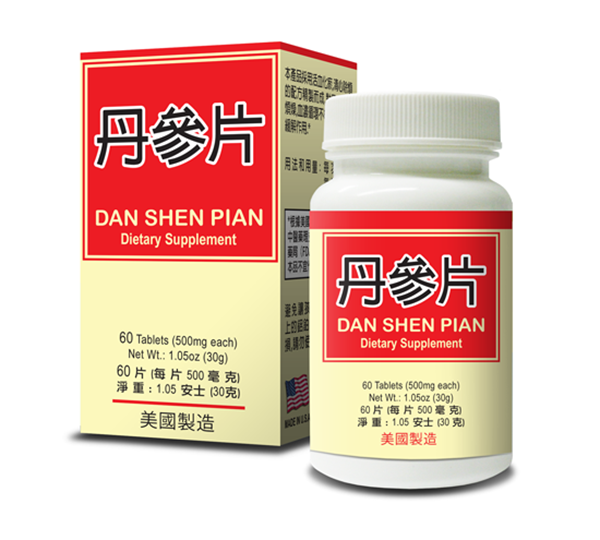
Dan Shen Pian (Healthy Heart) – by Lao Wei
 Add to Cart$10.12
 -
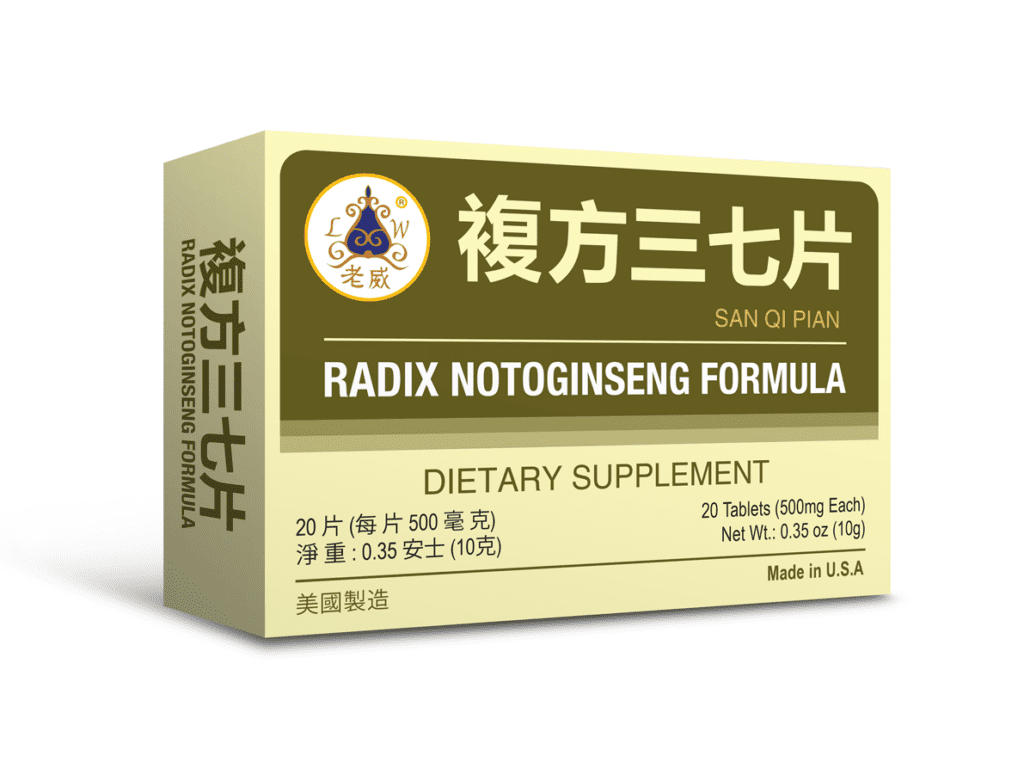
Radix Notoginseng Formula – by Lao Wei
 Add to Cart$8.49
 -
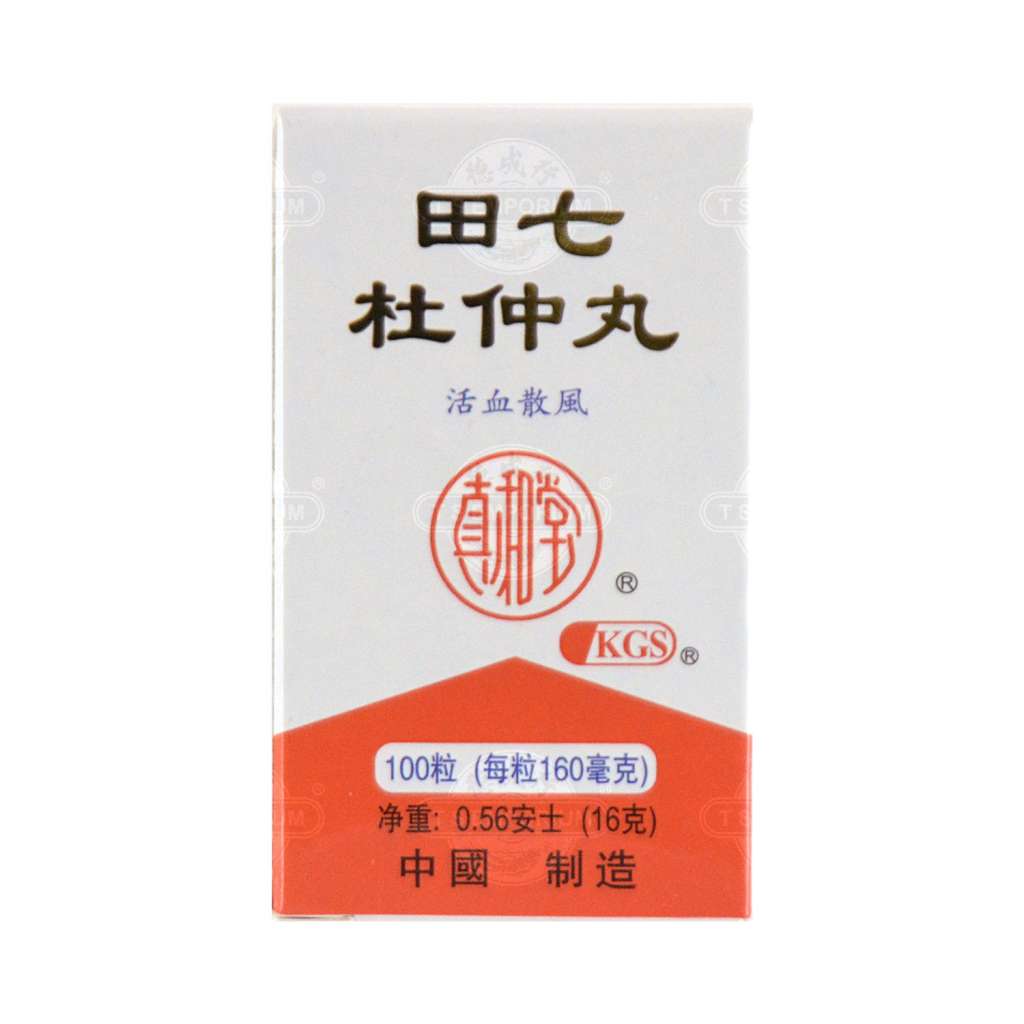
Tian Qi Du Zhong Wan – Tienchi Ginseng and Eucommia Combination
 Add to CartStarting at $7.99
 -
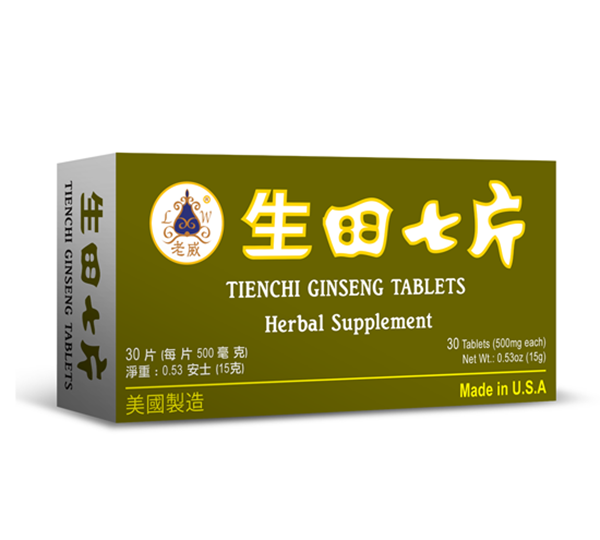
Tienchi Ginseng Tablets – by Lao Wei
 Add to Cart$10.95
 -
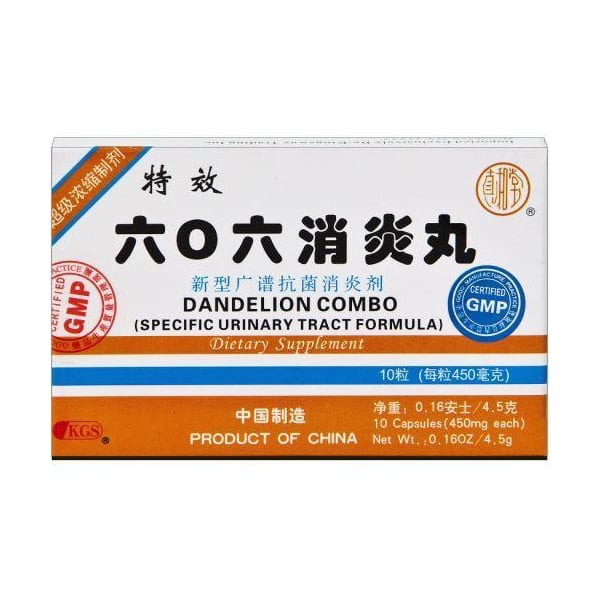
Liu Ling Liu Xiao Yan Wan (Dandelion Combo) – 606 Anti-Infection/Inflammation – (OUT OF STOCK)
 Add to CartStarting at $7.99
 -
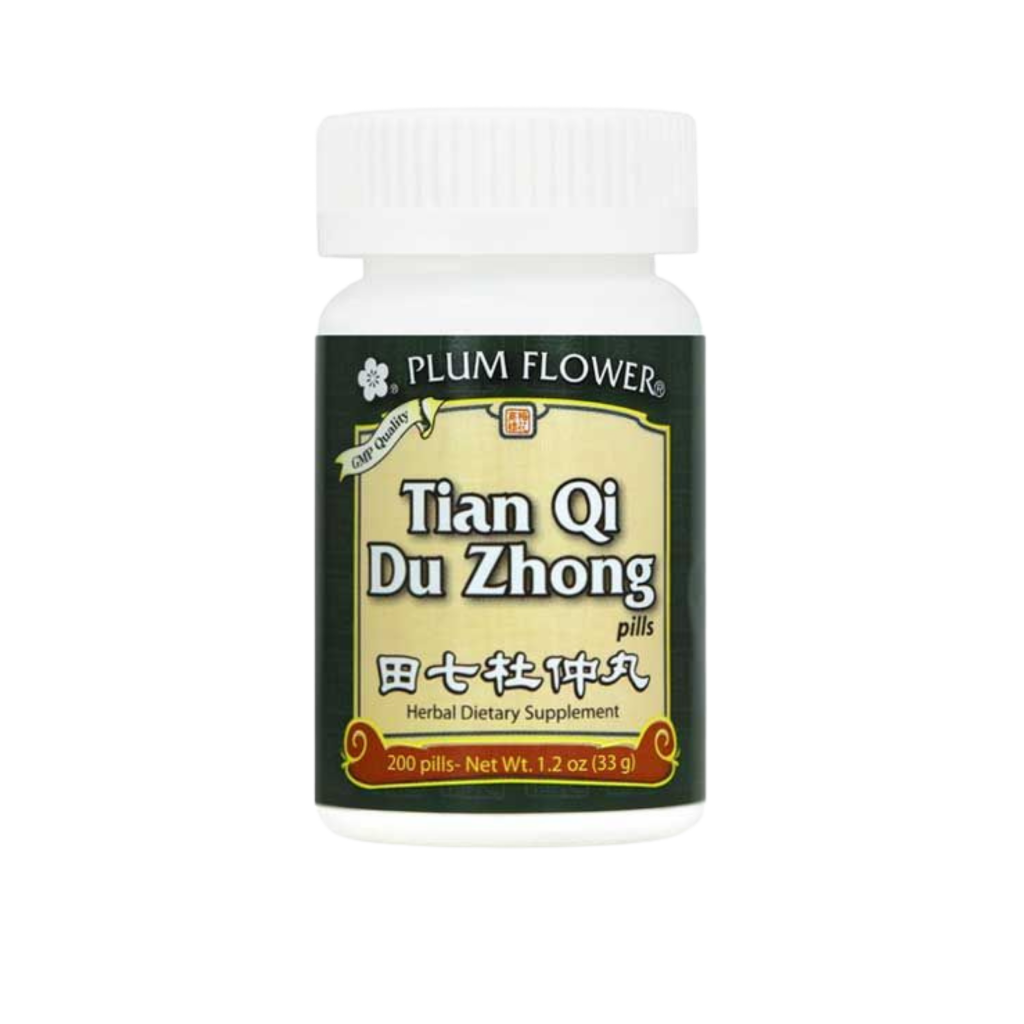
Plum Flower – Tian Qi Du Zhong Wan
 Add to Cart$27.53
$36.10